



When designing an auditorium, the seating layout is the most critical factor in determining the success of the space. It isn’t just about fitting as many chairs as possible into a room; it’s about sightlines, acoustics, safety, and, above all, the audience’s comfort.
A poorly planned layout can lead to “dead zones” where sound doesn’t reach or “blind spots” where the stage is obscured. In this guide, we will explore the essential principles of auditorium seating design to help you create a world-class experience.
1. Choosing the Right Seating Configuration
There are two primary ways to organize rows in an auditorium. Your choice depends on the room’s shape and the type of events you host. The visual below illustrates the key differences between these two popular layouts.
Multiple-Aisle Seating
This is the most common formal arrangement. It features a central block of seats with aisles on both sides and, often, a center aisle.
-
Pros: Easier navigation for latecomers and better emergency egress.
-
Best For: Large lecture halls and traditional theaters.
Continental Seating
In this layout, there are no central aisles. All seats are accessed from side aisles. To compensate for the lack of middle aisles, the spacing between rows (the “pitch”) is usually wider.
-
Pros: Provides a more intimate feel and maximizes seating capacity in the “sweet spot” of the theater.
-
Best For: Modern cinemas and high-end performance arts centers.
2. Prioritizing Sightlines: The “C-Value”
The goal of any seating plan is to ensure that the person in row R can see over the head of the person in row Q. This is crucial for providing a good viewing experience for everyone in the audience.
-
Staggered Seating: By offsetting seats so that a viewer looks between the heads of the people in the row in front, you can significantly improve visibility.
-
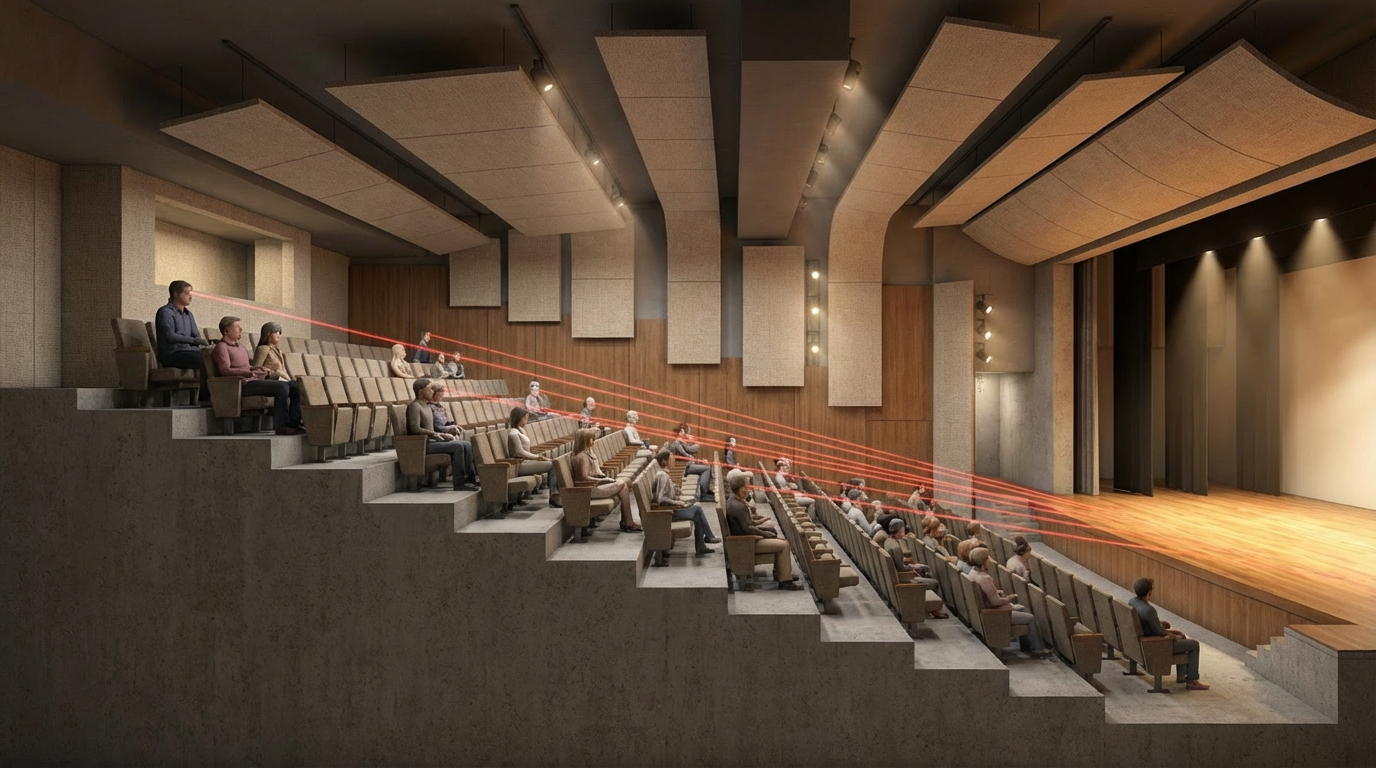
The Raked Floor: A sloped or tiered floor is essential for large auditoriums. The standard “C-Value” (the vertical distance between the eye level and the top of the head) should ideally be 6 cm to 12 cm to ensure an unobstructed view of the stage.
The image below demonstrates how a raked floor and proper planning ensure clear sightlines (represented by the red lines) for audience members in various rows.
3. Ergonomics and Spacing Standards
Comfort is what keeps an audience coming back. When selecting your Auditorium Chairs, pay attention to these measurements:
| Feature | Recommended Standard |
| Seat Width | 50 cm – 60 cm (center to center) |
| Row Spacing (Pitch) | 90 cm – 105 cm (for comfort and legroom) |
| Seat Height | 43 cm – 48 cm |
| Back Inclination | 15° – 20° for optimal lumbar support |
Pro Tip: Always account for the “envelope” of the seat—the space the chair occupies when the seat pan is down.
4. Acoustics: The Hidden Element
Did you know that seating acts as one of the largest acoustic absorbers in a room?
-
Empty vs. Full: A high-quality auditorium chair should be designed to have the same acoustic absorption whether someone is sitting in it or not. This prevents the “echo” effect in a half-empty hall.
-
Material Choice: Perforated seat bottoms and specific fabric densities help manage sound reflections.
5. Safety and Accessibility (ADA Compliance)
Safety isn’t just a recommendation; it’s the law. Your layout must include:
-
Clear Exit Paths: Minimum aisle widths are usually dictated by local fire codes (often at least 110 cm).
-
Wheelchair Integration: ADA (Americans with Disabilities Act) or local equivalent standards require designated wheelchair spaces that offer the same quality of sightlines as standard seating.
-
Illumination: Ensure aisle lighting is integrated into the seat end-panels for safety during dark performances.
Conclusion: Function Meets Aesthetics
A perfect auditorium layout balances the technical requirements of the building with the aesthetic vision of the designer. By choosing the right seating partner and focusing on the audience’s physical experience, you turn a simple room into a temple of culture and education.
Are you planning a new project or renovating an existing hall?
At [Company Name], we specialize in high-performance auditorium and cinema seating tailored to your specific floor plan.